The University of California, Berkeley’s station KALX is the on-air descendant of a student-run operation known as KAL, which sent audio from a studio in Ehrman Hall to nearby dormitories via a “carrier current” system. KAL began operations in 1962.
The University’s application to launch a 10-watt FM station required the selection of a four-letter callsign. KALX was the choice, and the Federal Communications Commission granted a construction permit in October 1966. After a series of what were described at the time as “bureaucratic and technical difficulties”, KALX went on the air almost a year later, on October 3, 1967.
An initial attempt to secure 90.1 MHz ran afoul of the fact that Stanford University’s KZSU was already broadcasting on the same frequency. The Cal application was modified and KALX took to the airwaves at 90.7 on the FM dial. With its 10 watt transmitter and antenna atop Dwinelle Hall, coverage was estimated to be no more than a four-mile radius.
Through the 1970s, KALX struggled with disorganization, going off the air in 1974 and losing its studio space and student-controlled funding. A reorganization in 1976 placed the station under the control of the UC chancellor’s Radio Advisory Policy Board and created a stable source of revenue from student fees.
1976 also saw the station move its studio and transmitter to the Lawrence Hall of Science in the Berkeley Hills. Power was still a minuscule 10 watts but the higher-elevation transmitter site boosted the station’s coverage area a bit.
Robert Pelzel would become the station’s general manager and implement stricter standards for programming and performance.
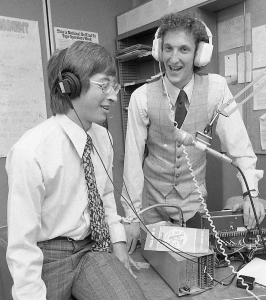
KALX made national headlines in 1978 when the station’s sports director, Larry Baer, worked out a deal with Oakland A’s owner Charles O. Finley to carry the Major League Baseball team’s games. Though the deal only lasted for 16 games, it put KALX on the map. Baer, of course, would go on to become CEO of the San Francisco Giants.
By the early ’80s, KALX had moved its studios into an off-campus location in downtown Berkeley and had boosted its power to 500 watts. The added power, with the antenna location near Grizzly Peak Boulevard, led to increased coverage.
That wider coverage area led to a dispute with another Bay Area college station. In 1990, San Jose State University’s KSJS moved its transmitter to a higher-elevation location. KALX complained to the FCC that its signal was being interfered with. The matter was resolved when KSJS acquired the license of a high school station and shifted to 90.5 MHz.
In 1995, KALX moved into new studios in the basement of Barrows Hall.