The Bay Area Radio Museum and Hall of Fame has launched a new way to experience the sounds of Bay Area radio history.
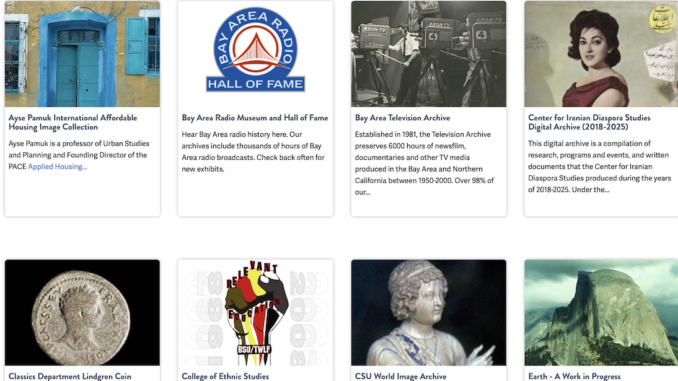
Working with San Francisco State University’s Academic Technology office, we are now using SF State’s DIVA platform. What is DIVA? In the words of its managers, “DIVA is an open digital collections archive built and managed by Academic Technology at San Francisco State University. It combines unique media, scholarly materials, and hidden treasures from the campus’s historic local impact. From original materials from the 1968 Student Strike to thousands of videos from the Bay Area Television Archive to poetry readings from the world-class Poetry Center, DIVA collections illustrate the campus commitment to social justice and our place in the San Francisco Bay Area community.“
Aided by California Historical Radio Society member John Kim, SF State Assistant Vice President of Academic Technology Andrew Roderick, and DIVA developer Charles O’Sullivan, we’ve built a customized application allowing us to do many things with digital artifacts such as audio, video, images, and documents. First and foremost, DIVA provides an elegant “front end” where we can share collections such as this group of Bay Area radio commercials dating back to the 1950s. We’ll be adding many more themed collections in the days and weeks ahead.
But DIVA is more than a way to publish material on the Internet. It’s also a robust content management system (CMS) that gives us the ability to store digital assets with a great deal of additional information, known as metadata, attached. We can thus create what are known as “complex database items”. In simple terms, imagine an audio tape, a photo of that tape, a script of the recording on the tape, a newspaper advertisement for the program recorded on the tape, and more–all in one digital envelope.
The SF State Academic Technology team has helped us create a customized backend for our content. In this way, we can include such details as the date of a broadcast, the station on which it was heard, that station’s format, the names of any announcers, and much more helpful information in each item.
In the future, this will give researchers the ability to access a great deal of information about these digital artifacts–all in one place.